AI is Transforming Everything Around Us
Every conversation seems to touch on AI these days—what it is, why it matters, and whether it actually delivers on its promises.
As a design leader, I stay at the edge of emerging technology to understand how to translate it into better, more human-centered experiences. We've seen waves of innovation before— world wide web, mobile devices and apps, internet of things, AR/VR, autonomous vehicles—but AI feels fundamentally different. This isn't just hype; it's a paradigm shift.
At Amazon, I witnessed generative and agentic AI applied in truly impressive, real-world ways. Amazon invests billions in AI, deploying it across nearly every business unit and surface. Being part of that environment was both influential and energizing—it gave me firsthand insight into how powerful these technologies become when thoughtfully integrated into products and systems at scale.
This page exists to draw lines in the sand: to articulate my personal AI stack, share ongoing experiments, and reflect on the principles guiding my approach. As leaders, we need to ground new technology in clarity, context, and responsible use—for ourselves and our teams.

Image generated in seconds with Midjourney
My AI Stack (Work-in-Progress)
Prototyping and Code
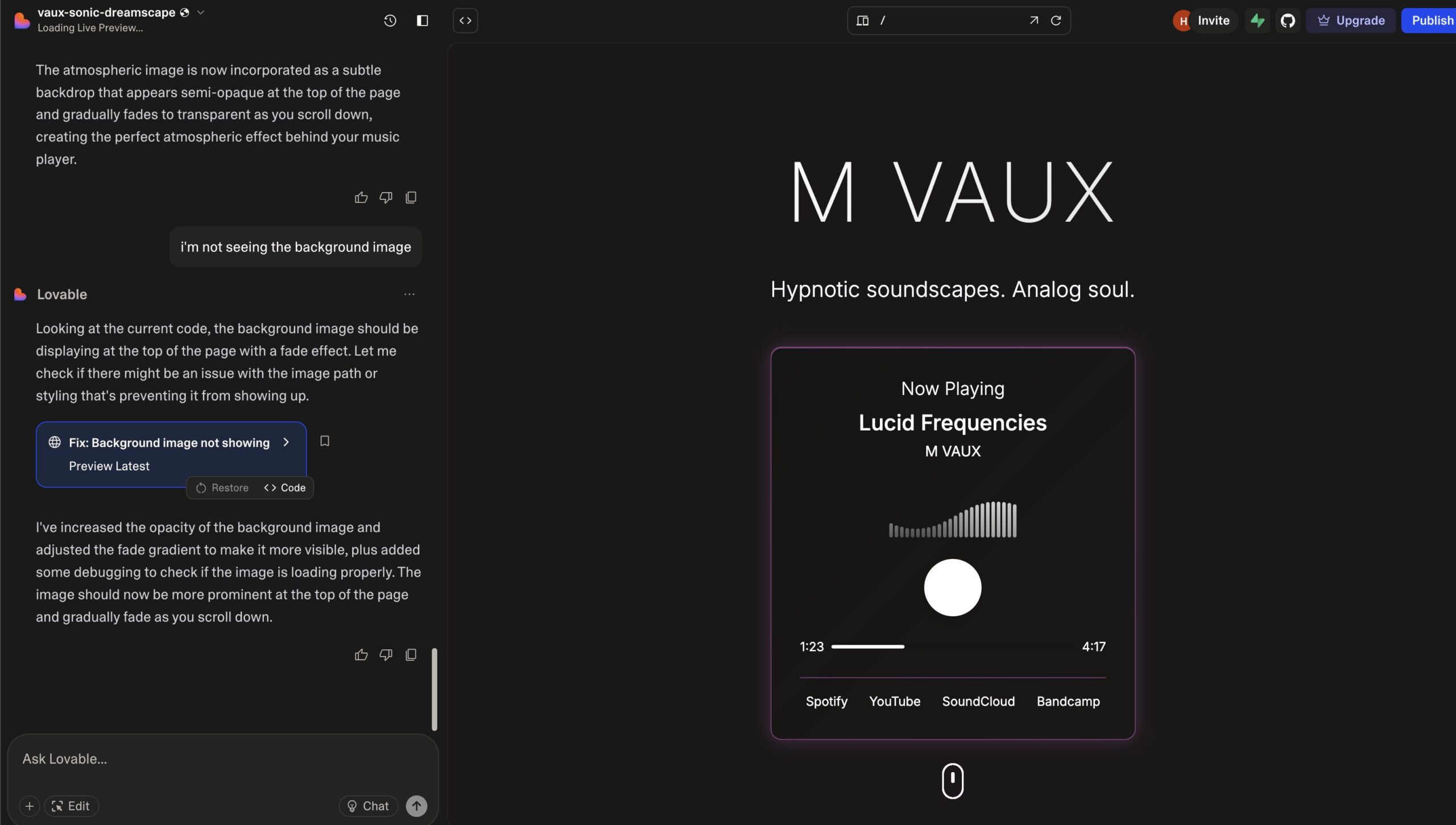
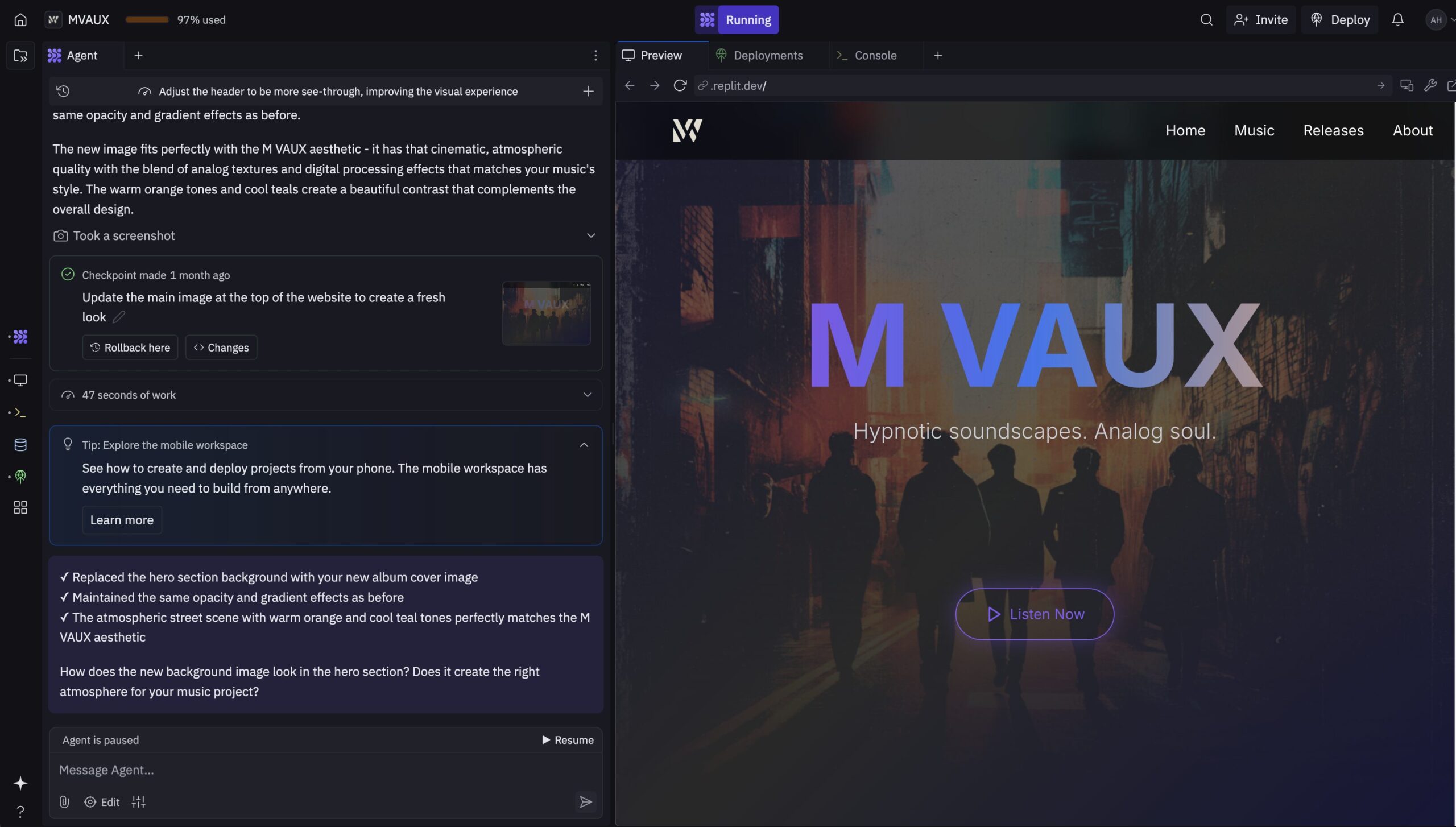
Text-to-code tools like Replit, Lovable, Cursor, and UX Pilot are transforming how we build. Each has unique strengths, but they share the same core value: instead of spending weeks designing and coding, these platforms generate interactive, working prototypes in minutes.
This fundamentally shifts product development. It's not about prompting and launching instantly—it's about shortening the cycle from idea to execution. These tools enable faster iteration, clearer team communication, and more space for creativity and experimentation. Crucially, design remains essential to ensure what's generated solves real user problems, maintains accessibility, and aligns with broader design systems.
Writing, Organization, and Research
My current go-to tools are ChatGPT, Claude, and Perplexity.
ChatGPT is my mainstay for conversational interaction and content iteration. It excels at tightening copy and delivering structured, in-depth research. Claude offers a more human, expansive tone—perfect for longer-form writing and brand voice. (Much of my site's copy started in Claude, then was refined in ChatGPT to reduce verbosity.)
For research, I often begin with Perplexity for quick, high-quality overviews, then run the same prompts through ChatGPT to expand context and synthesize additional insights. While imperfect, ChatGPT's new Agent functionality has been valuable for streamlining complex research and saving time on synthesis-heavy tasks.
Visual and Audio Creation
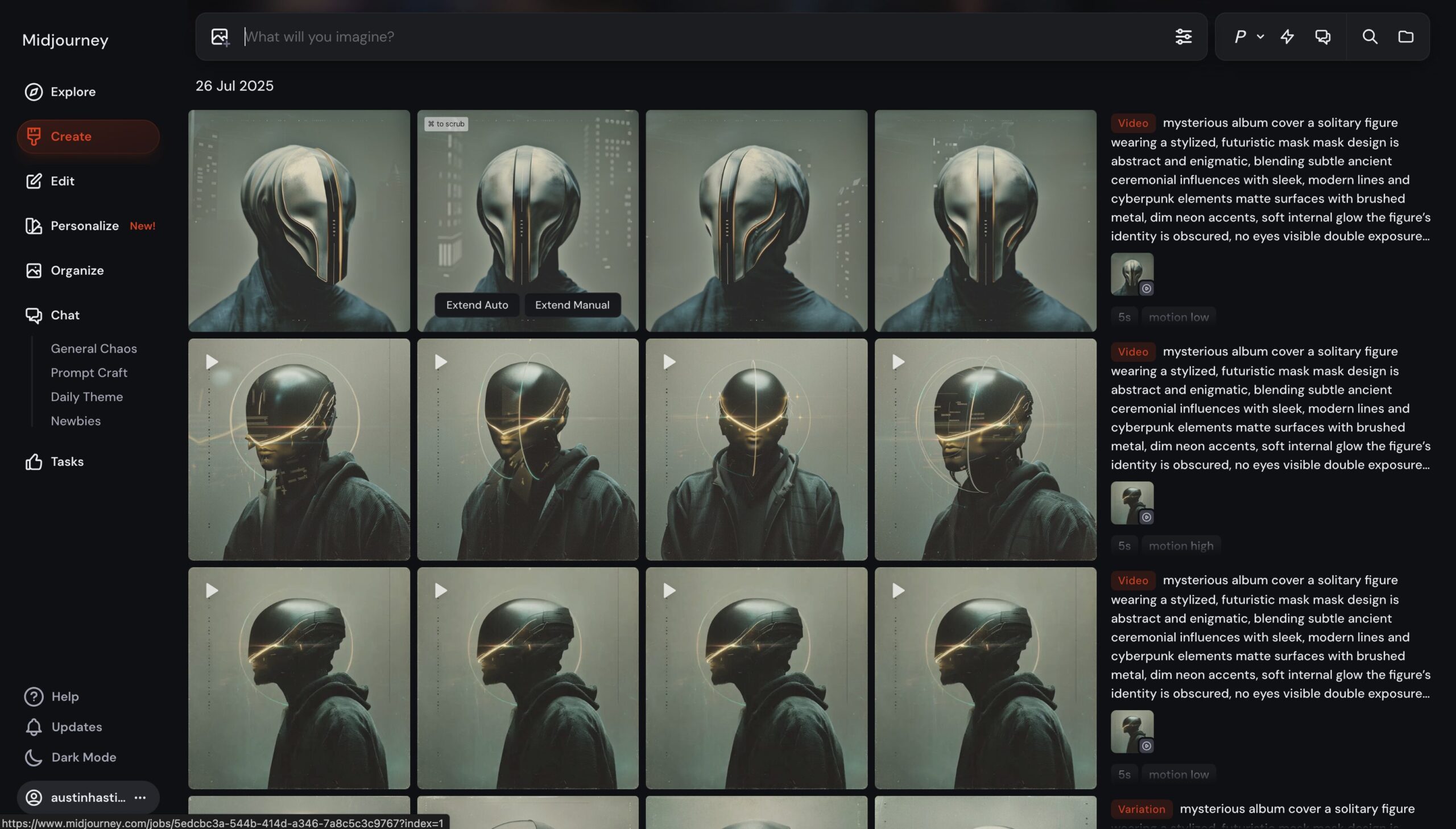
For imagery, I turn to Midjourney when I want something visionary, detailed, and cinematic. Its aesthetic sense is unmatched for both still and emerging motion visuals.
Ideogram is my choice for design-focused generation—especially when prompts require precision. The more specifically I describe layout, typography, or visual structure, the better the output.
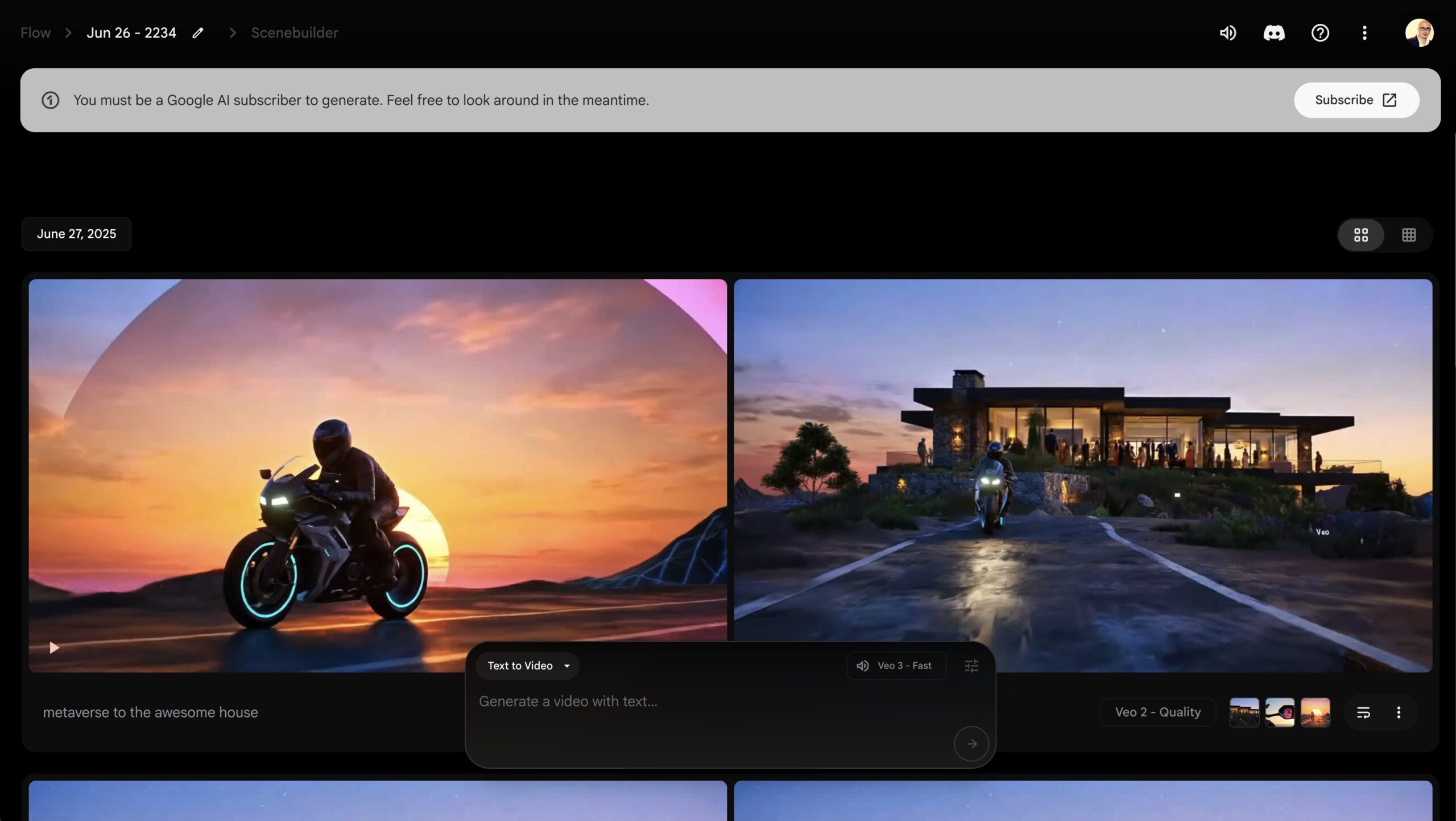
For video, Google's VEO3 is quickly becoming a powerhouse, delivering high-quality, cinematic results that once required massive budgets—now possible through smart prompting and image references.
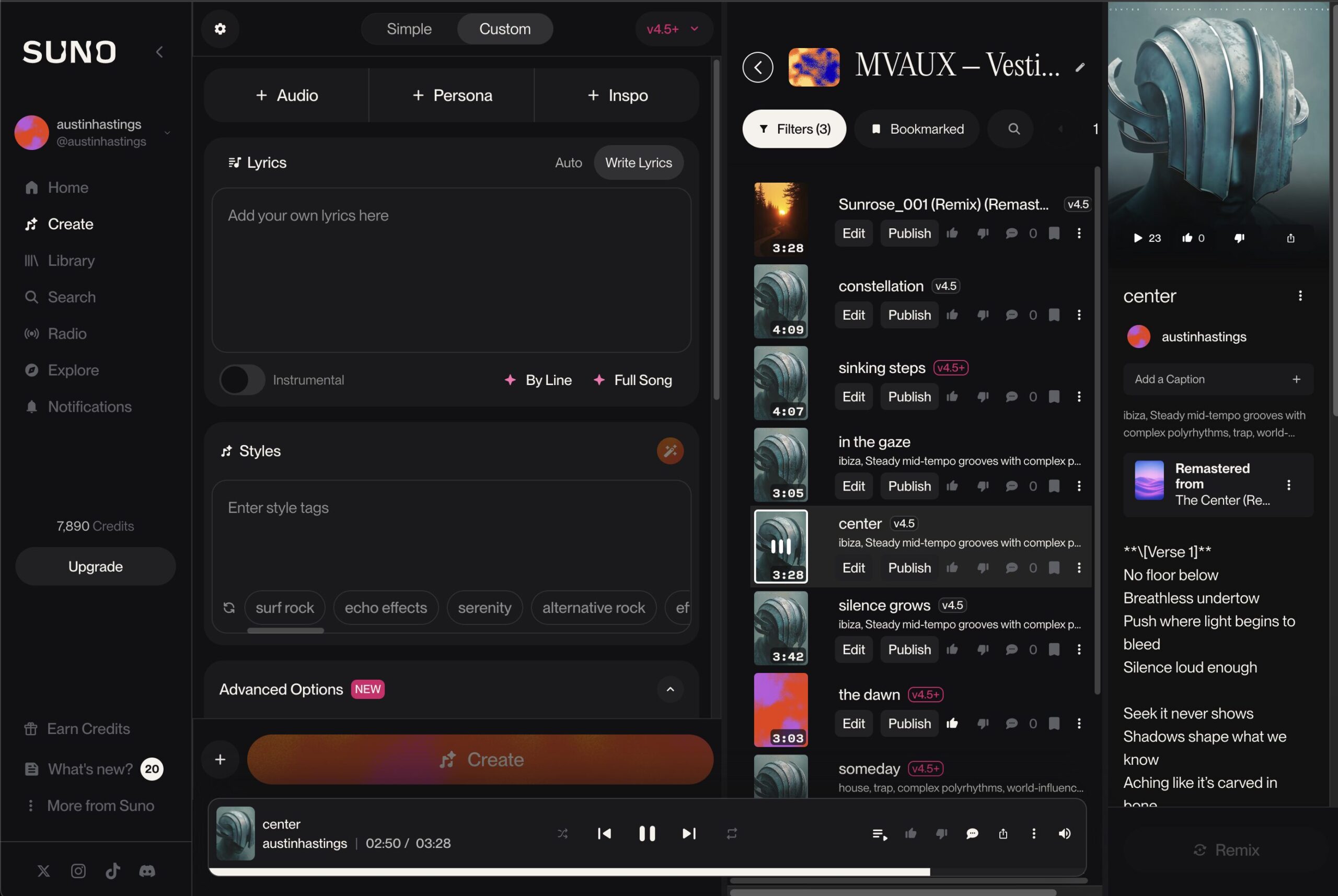
In music, I use Suno and Udio. I favor Suno for its ability to create near radio-ready tracks from prompts and audio examples, making it a powerful partner in AI-assisted songwriting and production.
Getting More from Generative AI
GenAI isn't perfect, it isn't magic (though sometimes it seems to be). Here's a key insight: simply entering vague or generic prompts into AI tools rarely yields great results—unless you get lucky.
Through deep interaction with these models, I've learned that success depends on three critical factors: prompt design, context, and taste. The more nuanced, specific, and well-structured the prompt—and the more relevant context you provide—the better the initial outcome. But that's just the starting point.
What separates exceptional results from mediocre ones is your ability to curate and iterate. This means knowing how to provide clear direction, recognizing quality when generations come back, understanding what to keep and when to keep pushing. It's about developing the discernment to separate signal from noise in AI output—knowing which elements spark with potential and which fall flat.
Supplying examples or reference material dramatically sharpens output, but the real craft lies in the iterative dance: refining prompts based on what you receive, building on promising directions, and having the taste to recognize when you've hit something worth developing further.
While the future will likely abstract much of this "prompt engineering" into more intuitive interfaces, today's reality requires both technical skill and creative judgment. If you've encountered "AI slop" in the wild, it's usually the product of generic inputs combined with poor curation. But with thoughtful prompting, clear intent, and refined taste, the results can be truly remarkable.
Resources
Tools and capabilities are developing daily, as are incredibly creative and talented people developing ways of framing and approaching how to best leverage AI.
SHAPE AI framework
From Janaki Kumar published by the Design Executive Council. AI has shifted from experimental to essential, transforming work across industries but often adding complexity when driven by technology rather than human needs. Design leaders have a pivotal role in shaping agentic AI to be seamless, trustworthy, and purpose‑driven, using frameworks like SHAPE to guide behavior and CLEAR to lead with curiosity, alignment, and accountability. By pairing intention with innovation, organizations can turn AI from a fragmented toolset into a cohesive, trusted collaborator that drives both business performance and human value.
SHAPE:
- S – Seamless UX: Designers zoom out before zooming in—and with AI, that’s essential. Rather than fixating on features or chatbots, we must map the full journey to see where AI truly fits and reduces friction. This holistic approach ensures AI adds value without complexity, creating experiences that feel natural, not bolted on.
- H – Human in the Loop: AI can spot patterns, synthesize data, and act fast—but in high‑stakes fields like healthcare and finance, final decisions must rest with people. We design systems that pair automation with human oversight, not just for compliance but because judgment, empathy, and accountability matter. In moments requiring accuracy, context, or ethical nuance, AI should advise—humans decide.
- A – Accountability: Trust drives adoption. Users deserve clear answers on AI decisions—what data was used, what logic applied. Transparent, explainable design builds confidence in both the tool and the organization, while making human accountability visible and actionable.
- P – Patterns: As agentic systems proliferate, design consistency is essential. A design system isn’t just a library—it’s a strategic asset that unifies diverse AI behaviors, ensuring they signal progress, reasoning, and requests in familiar ways. In a fast‑shifting, AI‑driven landscape, a shared design language is the connective tissue that makes innovation seamless.
- E – Ease the Cognitive Load: AI should help, not distract—delivering the right information at the right time. Like a smart intern, it needs direction and shouldn’t overwhelm. With SHAPE, agentic AI shifts from serving the business to serving people, fostering efficiency with empathy, clarity, and creativity.
This section is work in progress, more to come.
Looking Forward
I've spent considerable time partnering with generative AI across writing, concepting, coding, music, visuals, and motion video. Up next: agentic AI – stay tuned.
Contact
© 2025 Austin Hastings
Human-Centered Design Leadership