
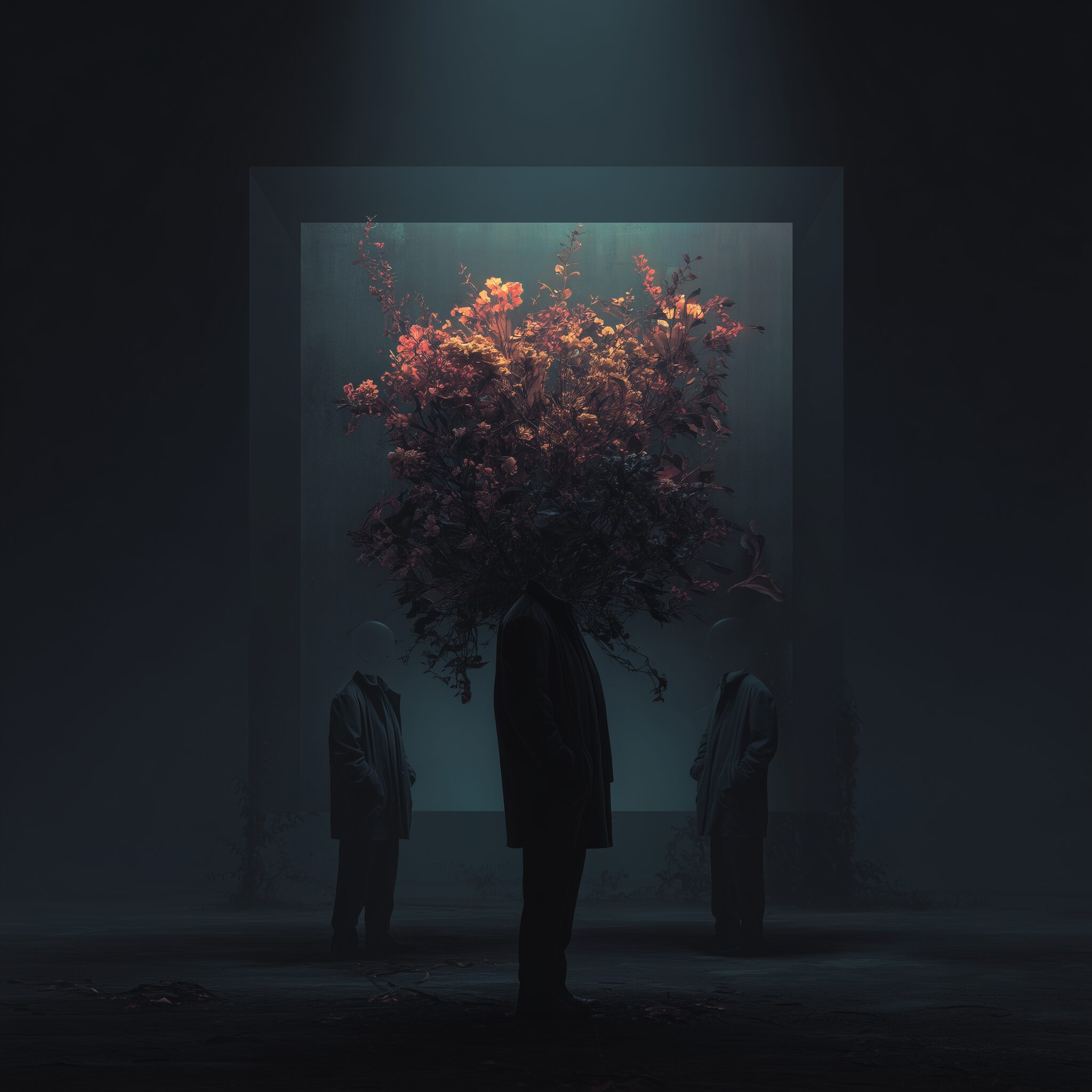
It's been 15 years since I released my last EP, Mira Vaux, in 2011. That three-song collection was a labor of love—me, alone in a room with Logic Pro, painstakingly recording every drum beat, bass line, synth part, and vocal track. It was hard work, but deeply rewarding to create something from scratch and share it with the world.
After that, life got busy in the best ways. My design career took off, I got married, had a kid, moved—all the wonderful chaos that fills your days and leaves little room for solo music projects. I kept writing lyrics, sketching out riffs, and occasionally throwing experimental tracks on SoundCloud, but the idea of producing a full album felt impossible. The process is just so time-intensive, and I couldn't wrap my head around starting again.
Enter AI
As someone who's been creative for over 20 years—as a musician, photographer, and designer—I've always been fascinated by new tools and technology. How can they help me express ideas? What are the implications for what I do?
When AI exploded onto the scene, I knew I had to understand it. Not just because it's reshaping creative industries (including my design career), but because I've always believed in staying fluent with the tools that are changing how we create.
I started exploring everything: ChatGPT and Claude for research, planning, and writing, Midjourney and Ideogram for visuals, and then—almost on a whim—Suno AI for music.
The Collaboration Begins
I'll be honest: I was skeptical that AI could create music worth listening to – no one wants to hear AI slop. But as I started experimenting with Suno, something clicked – it was capable of producing high quality music, but it needed a lot of direction to make it great. What if I brought real intention to this? What if I fed it all those years of lyrics I'd written, my original riffs and compositions, and really worked with the tool as a creative partner?
So that's what I did. Starting in June 2025, I spent the better part of six months learning the platform inside and out. I wrote all my own lyrics, trained the model with my original music compositions, and relentlessly edited—generating hundreds of versions per song to fine-tune every aspect. I listened for sounds and concepts that resonated, that pulled at my heartstrings, while making sure each song felt unique but part of a cohesive whole.
In a lot of ways, this process was freeing. It let me leverage my skills as a musician while filling in my gaps. I'm not the best producer or the most technical songwriter, but this collaboration helped me create something more compelling than I could have made alone.
The Result
My goal wasn't fame or fortune—it was a creative challenge. If I really poured myself into this, how good could AI-assisted music be? What happens when there's genuine collaboration between human creativity and machine capability? What even is this – music design? A new form of production? It's fascinating to explore the possibilities.
The answer is The Strand, my new album now available on all major streaming platforms on Friday, February 13, 2026.
I'm genuinely excited to share this with you—not just as a finished product, but as an example of what's possible when you approach AI as a creative partner rather than a replacement. And I'm already working on the next album, exploring new genres, voices, and sounds in ways that feel endlessly inspiring.
Listen to The Strand on 2/13/26 on all major streaming platforms.
No Comments.